
Sympathy cards are harder to write than almost any other card, and it’s easy to say the wrong thing even with the best intentions. Certain phrases, however well-intentioned, can minimize someone’s grief instead of comforting them. Here’s what to avoid on a sympathy card, and what to say instead so your words actually help.
Why Sympathy Cards Matter
Sympathy and condolence cards play a meaningful role in offering solace to someone who’s grieving. They show up when a phone call might feel like too much, acknowledging someone’s pain and letting them know they’re supported in their time of sorrow. Writing a heartfelt sympathy message can provide real comfort, as long as the words you choose don’t accidentally minimize what they’re going through.
Every phrase we choose should resonate with an expression of sympathy and understanding, delicately conveying the warmest condolences to the bereaved person.
You may be interested in reading: How to Send Sympathy & Condolences Virtually with Group ecards

What Should You Avoid Saying in a Sympathy Card?
When writing a bereavement message, avoid these common pitfalls. Here’s a list of things not to say.
1. I Know How You Feel
Acknowledging the pain they are going through should be done by using the right words. One of the most common phrases that should be avoided in a sympathy card is “I know how you feel.” Even if you have experienced a similar loss and lost a loved one, everyone’s grief is unique, and assuming you understand their emotions can come across as dismissive. Instead, express empathy by saying, “I can’t imagine how difficult this must be for you.”
2. It Was for the Best
Telling someone that their loved one’s passing was for the best or a blessing in disguise may seem comforting, but it can be hurtful and minimize the depth of their grief. Avoid making such statements and focus on offering support and love instead.
3. Time Heals All Wounds
While it’s true that time can ease the pain of loss, using this phrase may imply that the grieving individual should quickly move on. Grief is a personal journey, and it’s essential to let them process their emotions at their own pace. Instead, say, “Take all the time you need to heal.”
4. They Are in a Better Place Now
This sentiment may be rooted in good intentions, but it might not provide the comfort you intend in this time of grief. Respect the person’s beliefs and refrain from making assumptions about the afterlife. Instead, offer a sympathy quote such as, “May their happy memories bring you peace.”
5. At Least They Lived a Long Life
Even if the deceased person lived a long life, it doesn’t diminish the pain of their loss. Avoid diminishing the significance of the person’s passing with phrases like these. Instead, share a memory or highlight the positive impact the person had on others.
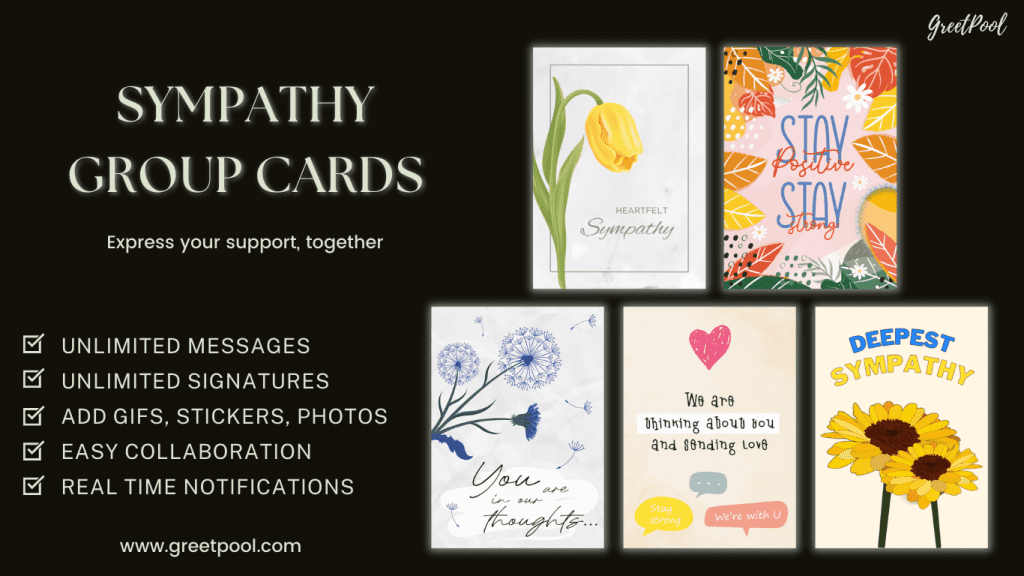
Would you like to send your sympathy wishes together as a group? Everyone adds their own note online, so the card arrives full of support instead of just one signature. Try a sympathy group card.
 Sympathy Group Ecards with messages and signatures from multiple people
6. “Stay Strong” or “Be Strong”
Encouraging someone to be strong during their grieving process may unintentionally invalidate their emotions. Grieving is a natural process, and it’s essential to allow them to experience their feelings fully. Offer support by saying, “I am here for you.”
7. It’s time to let go
The grieving process is unique for each person, and pressuring them to move on prematurely can be hurtful. It’s vital to offer support and understanding. Instead, say, “Take all the time you need to heal and know that I’m here to listen whenever you want to talk.”
8. Everything happens for a reason
Implying that there’s a greater purpose behind the loss may not offer genuine comfort. Instead, focus on providing support and love during their time of need. You may want to say this instead to comfort them truly “Please know that you are not alone. I am here for you.”
9. I can’t imagine what you’re going through
While well-intentioned, this phrase can create a sense of isolation. Instead, express your willingness to listen and be there for them. Instead say “I can’t fully understand your pain, but I’m here to support you in any way I can.”
10. You’ll get over it
This phrase may come across as dismissive, suggesting that grief is a temporary phase that should be quickly overcome. It’s essential to offer ongoing support. Say Instead: “Take all the time you need to heal, and remember that I’m here for you.”
Know what to say to someone suffering through the loss of a loved one: Condolence Message Examples: Finding the Right Words For A Sympathy Card

What Else Should You Avoid in a Sympathy Card Message?
Saying the wrong thing isn’t always about a single phrase. A gesture or an offer that sounds kind can still come across as disrespectful if it misses the moment. Here are some other things to avoid.
- Avoid Downplaying the Loss: Refrain from minimizing the significance of the person’s passing or suggesting that it’s for the best.
- Avoid Clichés: Steer clear of using common clichés that may come across as insincere or superficial.
- Avoid Comparisons: Avoid comparing their loss to others’ experiences, as each person’s grief is unique.
- Avoid Religious Assumptions: Be mindful of making assumptions about the person’s religious beliefs and avoid imposing your beliefs onto them.
- Avoid Offering Solutions: Don’t try to offer quick solutions or advice on how they should handle their grief.
- Avoid Rushing the Grieving Process: Allow them the time and space they need to grieve, and don’t pressure them to move on quickly.
- Avoid Self-Centeredness: Keep the focus on the grieving person and avoid sharing personal stories that divert attention from their loss.
- Avoid Mentioning Legal Matters: Avoid discussing legal matters or inheritance in the sympathy card.
- Avoid Humor: Humor may not be appropriate in a sympathy card, as it can be misinterpreted as insensitivity.
- Avoid Signing Off Casually: Use a compassionate closing rather than casual phrases.
- Avoid Vague Offers of Help: Saying “let me know if you need anything” puts the burden on the grieving person to reach out. Offer something specific instead, like bringing over a meal this week or picking up their mail.
- Avoid Suggesting a Replacement: Telling someone they can always get another pet or have another child minimizes the loss of someone irreplaceable. Their grief is about the person or pet they lost, not what might come next.
A thoughtful and sincere sympathy card message should avoid anything that might be dismissive, insensitive, or self-centered. It’s essential to approach the message with genuine empathy, acknowledging the depth of the recipient’s loss and providing comfort and support during their time of grief. If you’re also sending flowers or attending the funeral, the same etiquette applies: simple and sincere beats elaborate every time.
 Purchase Group Ecard Bundles and save upto 40%
Words of Comfort for a Sympathy Message
When you’re searching for words, keep your message simple and personal. A shared memory or a genuine offer to help says more than a polished phrase ever could. Here are words of comfort you can include in your sympathy card to express real care and support.
- “You Are in My Thoughts and Prayers” This classic expression has stayed popular for a reason. It offers a simple, heartfelt message of support. Letting someone know that they are in your thoughts and prayers can provide comfort during challenging times.
- “I’m Here for You” Sometimes, the most meaningful thing you can say is that you are there for the person. Offering your presence and support can be more valuable than finding the perfect words.
- “Their Memory Will Forever Live On” Acknowledging the lasting impact the deceased had on the lives of others can bring solace to the grieving. Share a memory or a positive story about the person to keep their memory alive.
- “I’m Sending You Love and Strength” Expressing love and offering strength is a way to show your care and compassion for the person enduring loss. Let them know that you are there to lean on if they need it.
- “Please Know You Are Not Alone” Grieving can often feel isolating, but reminding the person that they have a support system can be comforting. Offer your willingness to listen and be there for them whenever they need it.
Let us remember that our words are powerful tools, and when wielded with love and understanding, they can leave a lasting impression on those who receive them. You can also check out our detailed article on what to write on a sympathy card for 100+ examples and sample condolence messages, or read how coworkers can offer support during a workplace loss. Browse our sympathy GIFs for a gentle way to add warmth to your card.
Choose Your Words with Care
The words we choose on a sympathy card can profoundly impact those who are grieving and in this sad time. It is crucial to be mindful of the phrases we use in our personal sympathy message, avoiding common pitfalls that may inadvertently hurt or dismiss the grieving person’s emotions. Instead, offer genuine condolences, express empathy, and remind them that they are not alone during this challenging time. By following these guidelines, you can craft a thoughtful and comforting message that will provide solace and support to the bereaved person.
Remember, empathy, love, and compassion are the key ingredients to writing a heartfelt sympathy card that truly makes a difference. Show your care through your words, and your message will be a source of comfort and healing for those who receive it.
Frequently asked questions
What should I say instead of I know how you feel?
Try something like I can't imagine how difficult this must be for you. It acknowledges their pain without assuming your grief matches theirs.
Is it okay to send flowers with a sympathy card?
Yes, flowers are a thoughtful addition, though it helps to check family or cultural preferences first since some people prefer donations to a charity instead. A handwritten note alongside them means just as much as the flowers themselves.
How do I close a sympathy card message?
End with a simple, warm line like Thinking of you and your family or With heartfelt sympathy, followed by your name. Save casual sign-offs for a different kind of card.
Is it appropriate to add humor to a sympathy card?
Generally no. Even gentle humor can come across as dismissive of someone's grief. Save a funny memory for a conversation once the person seems ready for it.
What is the most comforting thing to say in a sympathy card?
The most comforting messages are simple and specific. Naming a memory of the person who died, or offering concrete support like I'm here whenever you want to talk, means more than any generic phrase.