
More than most organizers expect. Research on workplace ostracism finds that being ignored or excluded at work registers in the brain similarly to physical pain, and is linked to reduced job satisfaction, lower self-esteem, withdrawal and higher turnover intention. Being missed when a team celebrates a birthday, a work anniversary, or another milestone is a small instance of a well-studied phenomenon, and the fact that it was unintentional does not change how it is experienced by the person it happened to.
The practical implication is uncomfortable. A celebration that reaches most of the team can leave the organization worse off than one that never happened.
What does the research say about workplace exclusion?
Workplace ostracism has a formal definition in the literature. It is the extent to which an individual perceives that they are ignored or excluded by others at work (Ferris et al., 2008).
Three findings are worth knowing before you plan anything.
It hurts in a literal sense. Neuroimaging work found that social exclusion activates neural regions associated with physical pain. Researchers describe severe ostracism as a form of social death.
It threatens four basic needs. Kipling Williams, who founded much of this field, identifies belonging, self-esteem, control and meaningful existence as the needs ostracism undermines. That framework explains why being forgotten stings out of proportion to the event.
The consequences are organizational, not just personal. A meta-analytic review links workplace ostracism to worse job attitudes, reduced wellbeing and impaired performance, with effects on turnover intention and deviant behavior, and connects a lasting drop in morale to sustained, repeated exclusion rather than a single moment.
One important caveat: this literature is mostly about sustained, often deliberate exclusion, not about a one-off administrative miss. Being forgotten on a card is not equivalent to being systematically frozen out by a team. The research explains the mechanism the experience runs through, and why accumulating small misses matters. It does not establish that a single oversight causes the outcomes above.
Why does accidental exclusion still hurt?
The person excluded cannot see your intent. They can only see the outcome, and the outcome is identical whether you meant it or not.
Worse, the natural interpretation is not “somebody made an administrative error.” It is “people thought about who to include and I was not in the group.” That inference is available immediately and the correcting information usually is not.
There is a second problem. Exclusion is asymmetric information. The excluded person knows, and often nobody else does. They cannot easily raise it without appearing to be asking for attention over something small. So it typically goes unreported and unrepaired, which is precisely the condition under which small things accumulate.
Where do team celebrations most often fail?
Catered food, cake in the break room, and in-office lunches. Structurally exclusionary for anyone not present. Remote staff, night shifts and people on client sites are systematically missed.
Cards passed around physically. Whoever is not at their desk that day is missed, and the person carrying it round has no reliable record of who has signed.
Ad-hoc channel messages. Whoever is not in the channel does not exist for the purposes of that celebration.
A same-day birthday celebration or quick send-off. Speed guarantees the list is whoever came to mind, which is a proxy for proximity, not who should be invited.
Recognition concentrated on the same people. Distinct from a one-off miss, and more corrosive. If the same names recur, everyone else learns something about where they stand. It shows up especially around team wins, where the same few names get credited every time and the rest of the team quietly learns who counts as part of the team and who doesn’t.
The same imbalance shows up in formal recognition too. A single-winner award like Employee of the Month creates that pattern on purpose, and who gets recognized publicly versus privately shapes who feels seen even when nobody is technically left off a list.

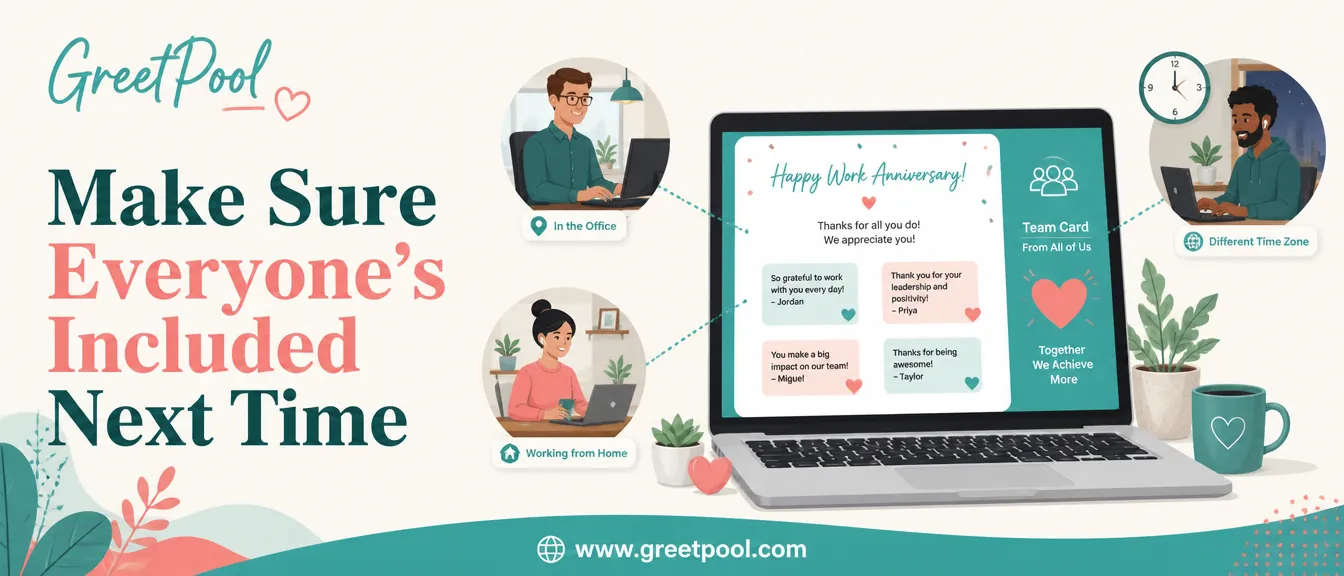
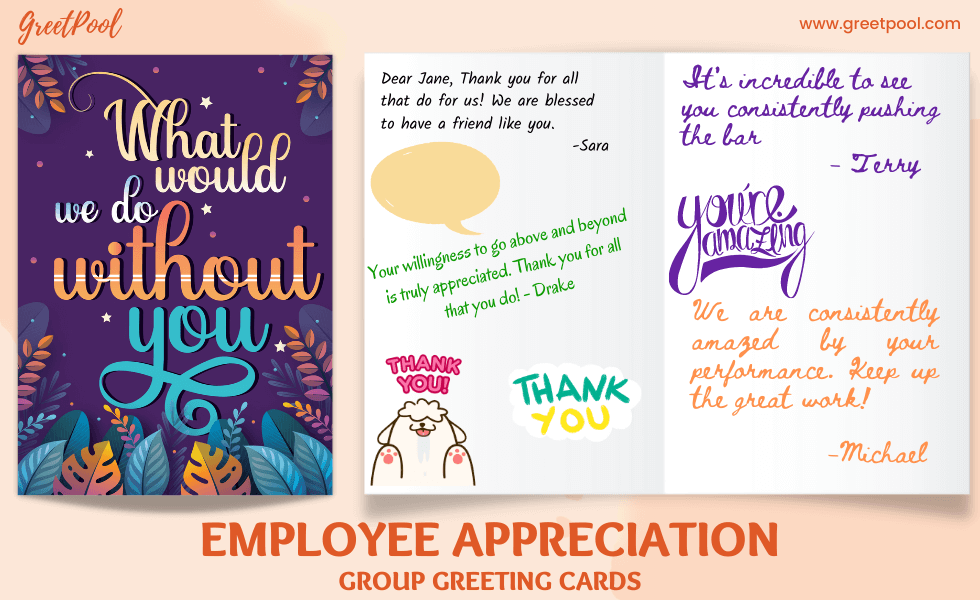
Would you like to make sure everyone gets included in the next celebration? A coworker appreciation card lets the whole team add their note online, on their own schedule, so nobody is missed just because they were not at their desk that day.
What should you do if you were the one left out?
Feeling excluded from something as small as a card is not an overreaction. Ostracism registers as pain because it threatens the same basic needs described above, and knowing why it hurts does not make the moment easier. What helps most is doing something specific rather than sitting with it.
Raise it with the organizer, not the group. A short private message works, sent to the organizer rather than posted where every colleague can see it. Something like “I noticed I wasn’t on the card for Priya, did I get missed?” gives them room to explain an oversight without turning it into an incident.
Weigh a miss against a pattern. If this is the first time and the explanation holds up, that fits the accidental-exclusion case this article is about. If it has happened more than once, that is a different conversation, and probably one for your manager rather than the person who organized this particular card.
Do not wait for a repair that isn’t coming. Some organizers will fix it well. Others will not notice at all. Either way, that tells you something about the process, not about how the team sees you, and it is fine to keep showing up fully for the next celebration without making a point of it.
Who is most likely to get left out of team celebrations?
Accidental exclusion is not random. The same categories recur:
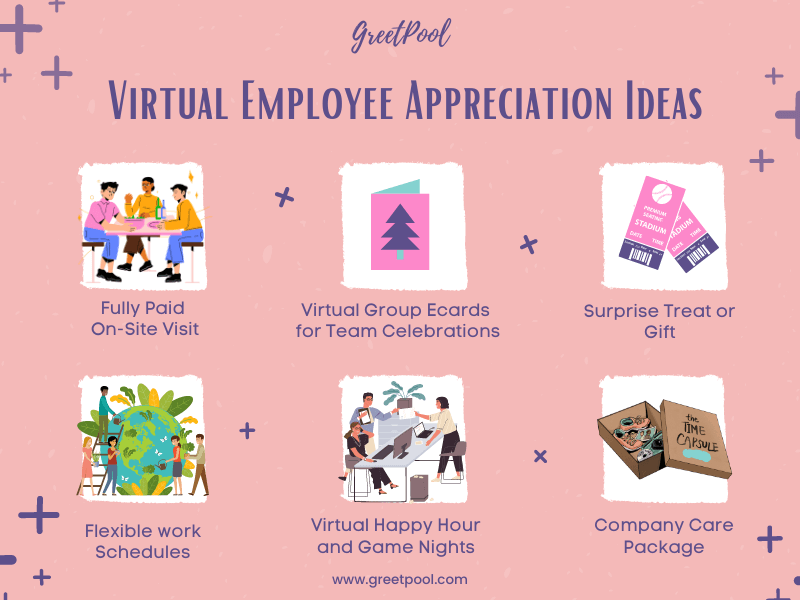
- Remote and hybrid staff, especially anyone not in the main office on the day
- People on leave during the event, including parental leave and sick leave
- Part-time and shift workers whose hours do not overlap the celebration
- Contractors and fixed-term staff who are functionally on the team but not on the distribution list
- Recent joiners not yet added to informal channels where these things get organized
- People on secondment or working with another team or department that quarter
- Anyone whose absence the manager or organizer will not notice, which is the common thread
Any team member can end up on the wrong side of that list, including a boss or supervisor who assumes someone else is keeping track.
Notice what unites the list. Exclusion follows whatever list the organizer used. If your source of truth is “who is in this Slack channel” or “who was at standup,” you have inherited that list’s gaps. None of it reflects how much the team values these people outside of work, only which list someone worked from.
How do you make exclusion structurally unlikely?
The reliable fix is not effort. It is not depending on effort.
Start from an authoritative list. The HR roster, not the channel membership or your memory. Whoever is not on the roster should be a deliberate decision, not an oversight.
Choose formats that reach everyone equally. Written recognition travels to remote staff, night shifts and people on leave identically. Food does not. A card that runs on one shareable link, sent over Slack, Teams, email or WhatsApp, lets every colleague add their note without creating an account, whatever office or time zone they’re in. That removes the coordination step that usually decides who gets left off the list.
Give people time to participate. Same-day organization excludes anyone not online that day, and a proper invite sent early lets people in other time zones take part too.
Make participation visible to the organizer. If you can see who has and has not contributed, you can chase. If you cannot, you are guessing.
Track who has been recognized over time. The concentration problem is invisible in any single instance and obvious in a list.
Assign it to someone with a stake. Rotating this to whoever is least busy produces exactly the low-attention approach that generates misses.
For a wider set of recognition ideas that foster real participation, not just avoid exclusion, see our guide to employee recognition ideas.
What should you do if you forgot to include someone?
Do not stage a corrective celebration. It draws attention to the original omission and makes the person the subject of a second event they did not ask for.
Acknowledge it directly and privately, name it as your error rather than an oversight in the abstract, and do not over-apologize, which shifts the burden onto them to reassure you. Then change the process, and say what you changed. The repair that matters is the one that makes it not happen again, and it is processes, not one grand gesture, that actually shift a work culture.
← More message ideas. Browse what to write for every occasion, by recipient and tone.
Research cited
- Ferris, D. L., Brown, D. J., Berry, J. W., & Lian, H. (2008). The development and validation of the Workplace Ostracism Scale. Journal of Applied Psychology.
- Williams, K. D. (2007). Ostracism. Annual Review of Psychology, 58, 425–452.
- Eisenberger, N. I., Lieberman, M. D., & Williams, K. D. (2003). Does rejection hurt? An fMRI study of social exclusion. Science.
- Howard, M. C., Cogswell, J. E., & Smith, M. B. (2020). The antecedents and outcomes of workplace ostracism: A meta-analysis. Journal of Applied Psychology.
- Consequences of Workplace Ostracism: A Meta-Analytic Review, Frontiers in Psychology, 2021.
- Practical implications of workplace ostracism: a systematic literature review, Emerald, 2023.
Frequently asked questions
Why does being left out at work hurt so much?
Research on ostracism finds that social exclusion activates brain regions associated with physical pain. It also threatens the four basic needs of belonging, self-esteem, control and meaningful existence. The reaction is not disproportionate. It is what exclusion does.
Is being forgotten on a card the same as workplace ostracism?
No. The ostracism literature mostly studies sustained, often deliberate exclusion. A single administrative miss is not the same thing. It runs through the same mechanism, which is why it stings, but the documented organizational consequences relate to persistent exclusion.
What should you do if you were the one who got left out?
Raise it directly with whoever organized the celebration rather than the whole team, and be specific about what happened. A single missed invitation usually is not a pattern worth escalating, but if it keeps happening, that is worth raising with your manager instead.
Who is most likely to be left out of workplace celebrations?
Remote and hybrid staff, people on leave, part-time and shift workers, contractors, recent joiners, and anyone on secondment. The pattern is that exclusion follows whatever list the organizer worked from.
How do you include remote employees in team celebrations?
Choose formats that do not depend on physical presence, work from an authoritative roster rather than channel membership, and allow enough lead time for people in other time zones to take part.
What should you do if you forgot to include someone?
Acknowledge it privately and directly, own it as an error rather than describing it passively, avoid staging a compensating event, and change the process so it cannot recur.