
When the goodbye isn’t a happy one, a heartfelt farewell card gets harder to write, but the fix is the same one that works for an easy exit. Name a real thing that happened, say what it meant, and stop. One specific memory beats three sentences of general praise, especially when “good luck in your next chapter” would sound tone-deaf or worse.
That’s true whether a coworker got a great new job, was laid off without warning, was fired, or left the building without getting to say goodbye to anyone. The situation changes what you can honestly say. The structure underneath doesn’t.
If you have thirty seconds, use this. Specific memory, what it meant to you, genuine good wish. That structure works for almost every situation below, hard cases included.
What structure actually works?
1. Anchor in something specific. A project, a moment, a habit of theirs, a time they helped you. This is the whole message. Everything else is framing.
2. Say what it meant. Not that they were great, but what changed for you because of them. “I stopped dreading the Monday reports after you rebuilt them” says more than “you were amazing to work with.”
3. Close forward. Brief, warm, not overwritten.
What you leave out matters just as much. Skip your own feelings at length, anything requiring them to reply, in-jokes that exclude other readers of the card, and promises to stay in touch you won’t keep.

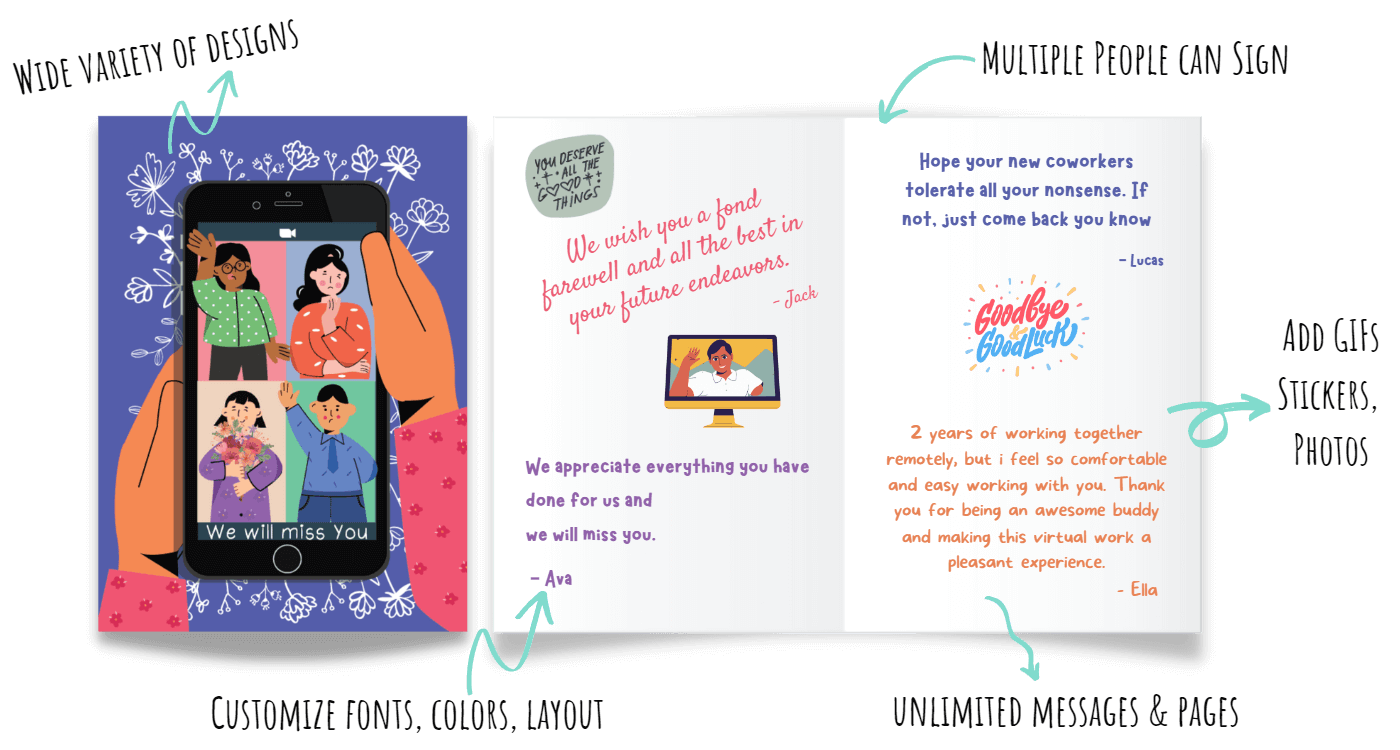
Would you like to send your farewell messages together as a group? A coworker farewell card lets each person add their own line instead of everyone squeezing onto one physical card.
What should you write, based on how well you knew them?
The right register still depends on how well you knew them. Someone you worked with closely earns real specificity.
The Q3 platform migration would have been a disaster without you rewriting the whole rollout plan at 11pm the night before launch. I learned more from watching you handle that than from anything else that year. Genuinely going to miss having you two desks away.
Someone you barely overlapped with earns honesty instead, not manufactured closeness.
We didn’t work together much, but you were the one who always caught the scheduling conflicts before they became a problem. That saved me more than once. All the best out there.
For the full range, sorted by exactly who you’re writing to and the tone you want, funny, professional, remote, boss, retiring, our complete collection of farewell message examples has 110+ to pick from.

What are the hardest situations to write for?
Most guidance stops at the happy exit. These are the situations people actually search for.
Someone who was laid off
A laid-off coworker doesn’t need the job loss dressed up as good news. Do not congratulate them. Do not describe it as an exciting new chapter. Do not use “everything happens for a reason.” Do not compare their situation to anyone else’s, and do not center your own relief at having kept your job.
Acknowledge that this was not their choice, without dwelling on it, and put the weight on their work.
This wasn’t your decision and it isn’t a reflection of your work. The onboarding system you built from scratch is still the one the whole team runs on. I’d work with you again in a heartbeat, and I mean that as a standing offer.
A specific, usable offer of help is worth more than sympathy. “Happy to be a reference, and I’ll flag anything I hear of at the two companies I know are hiring” is concrete. “Let me know if you need anything” is not.
There’s a research argument for doing this well that has nothing to do with sentiment. Research on layoff survivors, going back to organizational psychologist Joel Brockner’s studies in the 1990s, finds that how departing employees are treated shapes how fairly the people who remain judge their own standing with the company. The people still in the building are watching.
If it wasn’t a layoff, if it was a firing, don’t borrow that language. “This wasn’t your decision” isn’t true for a firing, and reusing it reads as either naive or complicit. Keep it closer to the bad-terms register below. Brief, neutral, one true thing about their work, and no reassurance you can’t honestly give.
Someone leaving on bad terms
Keep it short, true, and neutral. Do not perform warmth you do not feel, and do not use the card to settle anything.
Good luck with what comes next.
That is an acceptable entire message. Brevity reads as restraint, not hostility, and anything longer risks sounding sarcastic.
Someone leaving because of a situation everyone knows about
Do not allude to it. The card is a permanent object that other people will read. Say something true about them and leave the context alone.
Someone you did not get on with
Find one genuine thing. There usually is one, and a narrow honest sentence is better than broad false praise, which they will read as exactly what it is.
Someone who left suddenly, with no chance to say goodbye
Sometimes there’s no goodbye moment to write toward. Someone is escorted out the same day, told to clear their desk immediately, or simply isn’t at their desk anymore and nobody explains why. The card, if there’s a card at all, gets signed after the person is already gone, which changes what you’re writing.
Write it as something to send rather than something to hand over. Address a former coworker directly, keep it specific and short, and send it to whatever contact information you actually have, a personal email if that’s what you’ve got, rather than letting it sit unsent because the moment to deliver it in person never came.
I heard you’re gone and I didn’t get the chance to say this in person, so here it is. Working next to you the past two years made the job better, and the way you handled the Peterson account taught me more than any training did. Wherever you land next, they’re lucky to have you.
If you get one brief moment, a hallway minute while security waits, say the one true thing you’d want them to know and let it be short. Do not use it to ask what happened.
What should you not write?
- “Good luck in your next chapter.” The most common sentence in leaving cards and the least informative.
- Anything about the company’s loss rather than the person. “We’ll be lost without you” centers you.
- Advice. They did not ask, and a card is a strange place for it.
- Anything about their reasons for leaving. Even if they told you, other people will read this.
- Inside references only two of you understand, in a card everyone signs.
- A signature with no message. If you genuinely have nothing, one honest specific sentence is always available.
What should you do if you’re organizing the card?
- Give people several days. Same-day cards produce name-only signatures, which is what generates the thin messages above.
- Tell people what to write. A single line of guidance, one specific memory please, tends to noticeably improve what comes back.
- Make sure everyone can sign, including remote colleagues, people on leave, and anyone on a different shift. Whoever cannot reach the card is missing from a permanent record. A shareable signing link, the kind GreetPool builds group cards around, solves this directly. Contributors add their message from a link with no account required, so a colleague on leave or three time zones away can sign the same card as everyone in the office, and there’s no limit on how many people add a note.
- Do not chase publicly. A channel-wide reminder naming who has not signed puts people on the spot and produces worse messages.
- Check who is missing before you send. The person will notice an absence more than any individual message.
If the team is also chipping in for a gift, a farewell gift card pools everyone’s contribution the same way a group card pools everyone’s message, useful when there’s no time to organize a physical collection.
How long should it be?
Two to four sentences for most relationships. Someone you worked with for years earns more room. Someone you barely knew is fine with one honest line.
Length is not the signal people read. Specificity is. A single concrete sentence outperforms a paragraph that could have been addressed to anyone.
← More message ideas. Browse what to write for every occasion, by recipient and tone.
Frequently asked questions
What do you write in a farewell card for a coworker you don't know well?
Something short and true. Name one specific thing they did that affected your work, and wish them well. Manufactured closeness is obvious and worse than brevity.
What should you write when a colleague has been laid off?
Avoid congratulations and avoid framing it as an opportunity. Acknowledge briefly that it was not their choice, say something specific about their work, and make a concrete offer such as acting as a reference. Specific help is worth more than general sympathy.
What do you write for a coworker who was fired rather than laid off?
Do not reuse layoff language. Saying it wasn't their fault isn't accurate for a firing and can read as naive or dishonest. Keep it brief and neutral, closer to what you'd write for someone leaving on bad terms, and stick to one true thing about their work rather than a reassurance you can't back up.
What do you write to a coworker who left with no notice, like being escorted out?
Write it to send rather than to hand over, since there's usually no in-person moment left. Address them directly, name one specific thing, and keep it short. If you do get a brief hallway moment before they leave, say the one true thing and let that be the whole message.
Is it rude to just sign your name?
It is noticeable, particularly on a small team. One specific sentence takes less time than deciding what to write and reads very differently.
What do you write for someone leaving on bad terms?
Keep it brief and neutral. A simple good wish is a complete message. Longer attempts at warmth tend to read as insincere, and the card is permanent.
How long should a farewell message be?
Two to four sentences is right for most working relationships. Specificity matters far more than length.
Should you mention why they're leaving?
No. Other people will read the card, and a departure reason that is currently common knowledge may not be something the person wants recorded.