
Bosses shape our professional lives more than we often realize. They open doors, share hard-won knowledge, and sometimes absorb the pressure so the rest of the team can focus. When you sit down to write a Boss Day card or a thank-you message, that appreciation is genuine — but putting it into words can feel surprisingly tricky.
A thoughtful card strengthens the relationship between you and your boss. A careless one can create awkwardness that lingers well beyond October 16. This guide walks through the most common card-writing mistakes, explains why they miss the mark, and gives you better alternatives so your boss appreciation wishes land exactly the way you intend.
How to Craft a Perfect Boss Appreciation Message
Before we look at what to avoid, here’s what makes a boss appreciation message actually work. The best messages share three qualities: they’re specific, sincere, and professional. That means referencing something your boss actually did — not just filling a card with vague praise.
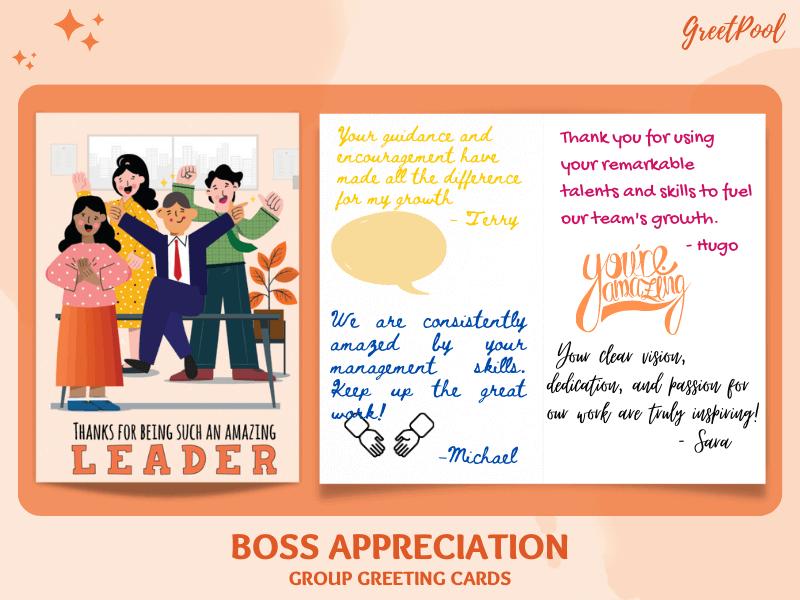
Choosing the right card for Boss Day sets the tone before your boss reads a single word. A well-designed group card from GreetPool lets your entire team contribute personal messages, which carries far more weight than a solo note. Each person adds their own specific appreciation, creating a mosaic of genuine gratitude that no single card could match.
Here’s what separates a forgettable message from one your boss actually remembers.
Be Specific, Not Generic
Instead of “Thanks for being a great boss,” try “Thank you for stepping in during the product launch last month — your calm under pressure kept the whole team focused.” Specific details show that you’re paying attention, not just going through the motions.
Keep It Professional but Warm
The sweet spot is somewhere between a formal business letter and a text to a friend. You want your boss to feel genuinely appreciated without either of you feeling uncomfortable. Think of it as the tone you’d use when thanking a mentor — respectful, warm, and honest.
Acknowledge Their Impact on the Team
Great bosses care about team outcomes, not just individual praise. Mentioning how their leadership helped the group — “Your decision to restructure the weekly standup saved everyone time and made handoffs smoother” — resonates more than personal flattery.
You may want to read: Creative Ideas for Boss Appreciation Group Greeting Ecards
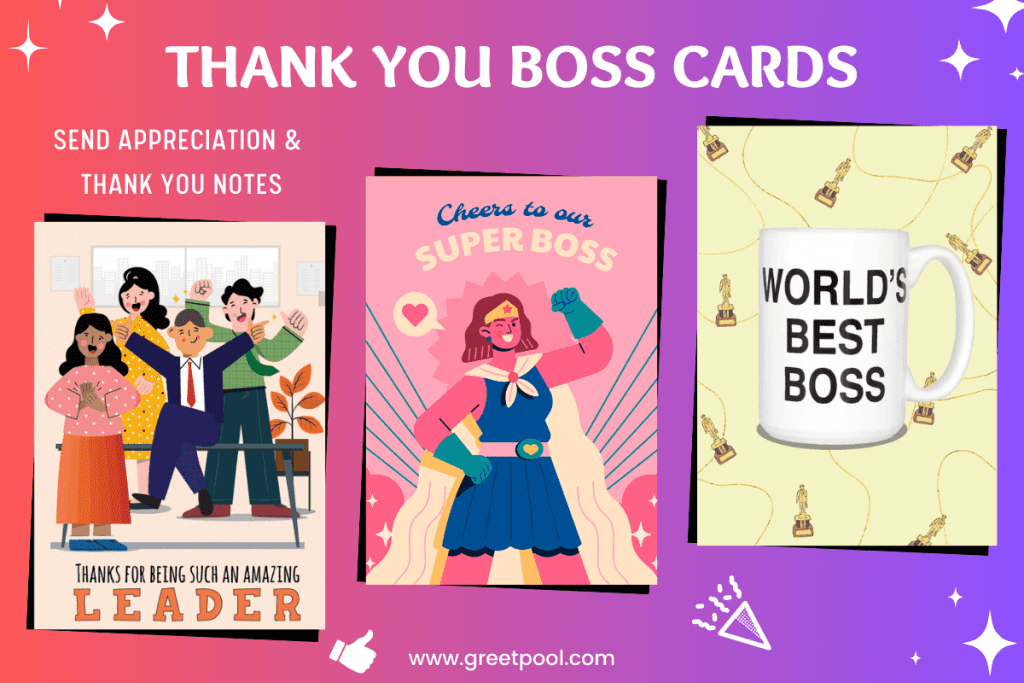
8 Boss Day Card Mistakes to Avoid
Even well-intentioned messages can miss the mark. Here are the most common mistakes people make when writing boss appreciation wishes — and what to do instead.
1. Excessive Flattery
The mistake: Laying it on so thick that the message sounds like a performance review written by someone trying to get promoted.
Why it backfires: Most bosses can tell the difference between genuine appreciation and strategic flattery. Overdoing it makes your message feel transactional rather than heartfelt, and it can actually damage your credibility with colleagues who read the group card.
Better approach: Balance your praise with specifics. “I appreciate how you handled the client escalation last quarter — your approach taught me a lot about de-escalation” is honest and grounded.
2. Jokes and Sarcasm That Could Be Misread
The mistake: Adding humor that works in person but falls flat in writing — especially sarcasm, which relies on tone of voice to land.
Why it backfires: Written words lack vocal cues. A joke about your boss’s coffee addiction might get laughs in the break room but read as passive-aggressive in a card. If others are signing the same group card, context is even harder to gauge.
Better approach: If you want to be lighthearted, keep it positive and specific. “Your Monday morning energy is contagious — even before the coffee kicks in” is warm without risking misinterpretation.
3. Complaints Disguised as Feedback
The mistake: Slipping constructive criticism into an appreciation card. “Thanks for everything — I hope next year we can work on better communication” is not the compliment it pretends to be.
Why it backfires: A Boss Day card or thank-you message is a celebration, not a performance review. Mixing in grievances undercuts the entire point and can sour the occasion for your boss.
Better approach: Save feedback for one-on-one meetings. Keep the card focused entirely on what you appreciate. If you genuinely can’t think of anything positive, a short, sincere “Thank you for your leadership this year” is better than a backhanded compliment.
4. Overused Quotes and Clichés
The mistake: Filling the card with generic leadership quotes your boss has seen on a hundred LinkedIn posts.
Why it backfires: It signals that you didn’t put personal thought into the message. Your boss knows they’re reading a quote — they want to hear from you.
Better approach: Use your own words. If you do want to reference a quote, pick one that connects to a shared experience — then add your own line explaining why it reminds you of them.
Need inspiration for specific messages? Check out: 50+ Best Thank You Messages for Boss
5. Getting Too Personal
The mistake: Treating the card like a diary entry — referencing personal matters, family situations, or topics outside of work.
Why it backfires: Crossing professional boundaries creates discomfort, especially if other team members can see the message in a group card. Your boss may not know how to respond, which defeats the purpose of making them feel appreciated.
Better approach: Keep the focus on their professional impact. “Your mentorship has made a real difference in how I approach project planning” stays in the right lane while still being personal and meaningful.
6. Making Promises You Can’t Keep
The mistake: Getting caught up in the moment and writing things like “I promise to double my output next quarter” or “I’ll make sure our team hits every target.”
Why it backfires: Grand promises raise expectations you may not be able to meet. If you fall short, the promise in the card becomes an uncomfortable reminder rather than a positive memory.
Better approach: Express commitment without specific targets. “Working under your leadership motivates me to keep raising the bar” conveys the same sentiment without boxing you in.
7. Bringing Up Compensation or Promotions
The mistake: Using the card as an opportunity to hint at a raise, promotion, or job change. “Thanks for everything — I’m hoping this year brings new opportunities for me on the team.”
Why it backfires: It turns an appreciation moment into a negotiation. Your boss will feel like the gratitude came with strings attached, which diminishes both the message and your professional image.
Better approach: Keep career conversations for your regular check-ins. The card is about them, not your career goals.
8. Comparing Your Boss to Other Bosses
The mistake: “You’re so much better than my last boss” or “Other managers could learn a thing or two from you.”
Why it backfires: Comparisons put down other people to lift your boss up. It can come across as gossip or create tension if your boss works closely with the people you’re criticizing — even indirectly.
Better approach: Focus on your boss’s qualities on their own merits. “Your open-door policy has made me feel comfortable asking questions and growing in my role” stands on its own without needing a comparison.
What NOT to Say: 7 Real Examples
Sometimes it helps to see specific phrases that should stay out of your card. Here are common ones — and why they miss the mark.
“You’re like a second parent to me.” — Too personal for a professional context. It can make your boss uncomfortable and blur boundaries that help the working relationship stay healthy.
“Thanks for always covering for me.” — Implies you need covering, which raises questions about your reliability. Even if your boss has helped you through tough spots, frame it as mentorship instead.
“I wish I had your job — it looks so easy.” — Belittles the challenges your boss faces daily. Leadership roles carry pressures that aren’t always visible, and this phrase dismisses that effort.
“I don’t always agree with your decisions, but…” — Any compliment that starts with a disagreement lands as criticism first and appreciation second. Drop the qualifier entirely.
“I wish you were my friend instead of my boss.” — Suggests the professional relationship isn’t enough. It can create awkwardness and blur boundaries that both sides need.
“I’m glad I don’t have to make the tough decisions like you do.” — This sounds like you’re avoiding responsibility and undervaluing the weight of leadership decisions.
“Happy Boss Day! (from your favorite employee)” — Even as a joke, this can create tension with colleagues who see the card. In a group card especially, competitive humor lands poorly.
Group Card Etiquette: When the Whole Team Signs
A group card from the team carries more weight than any individual message — but it also means multiple people will read what you wrote. That changes the calculus for your boss appreciation wishes. Here’s how to get it right.
Write your own message. Don’t just sign your name or write “Ditto!” under someone else’s paragraph. Your boss will notice who put in the effort and who phoned it in. Even two sentences that are genuinely yours mean more than a signature.
Don’t repeat what others wrote. If three people before you already mentioned the quarterly results, find a different moment to highlight. Maybe your boss helped you navigate a difficult client call, or their feedback on your presentation made a real difference. The variety of specific memories is what makes a group card powerful.
Match the tone of the card. If the card organizer has set a warm, professional tone, don’t be the person who drops an inside joke that only two people understand. Read the room — or in this case, read the card so far.
Keep it concise. In a group card, you’re sharing space with your colleagues. Three to five thoughtful sentences is the sweet spot — enough to be meaningful without taking over the card. Save the longer reflections for a personal note if you feel moved to write one.
Organize early. If you’re the one organizing the group card, give your team at least a week to contribute. Last-minute requests lead to rushed, generic messages. With GreetPool’s group cards, you can share a link and let everyone add their message on their own time — no chasing people down in Slack.
5 Boss Appreciation Messages That Actually Work
If you’re staring at a blank card and need a starting point, here are five messages that follow the principles above — specific, professional, and genuinely warm.
- “Thank you for trusting me with the client presentation last month. Your feedback beforehand gave me the confidence to nail it.”
- “I really value how you make time for our one-on-ones, even during the busiest weeks. Those conversations have shaped how I approach problems.”
- “Your calm during the system outage last quarter set the tone for the whole team. We got through it because you kept us focused on solutions, not blame.”
- “Happy Boss Day! Working with someone who genuinely wants to see their team grow is something I don’t take for granted.”
- “Thank you for advocating for our team’s ideas in leadership meetings. Knowing we have someone in our corner makes a real difference.”
For dozens more examples tailored to different boss relationships, see our full list: 50+ Best Thank You Messages for Boss.
Boss Day 2026: Make It Count
Boss Day falls on October 16, 2026, but showing appreciation doesn’t need to wait for a specific date. Whether it’s Boss Day, the anniversary of a great project, or just a regular Thursday when your boss went above and beyond — a thoughtful card is always welcome.
The key takeaway: write what’s true, keep it professional, and be specific. Skip the clichés, avoid the traps above, and your boss will know the appreciation is real.
Ready to create your card? Browse boss appreciation group cards on GreetPool — pick a design, invite your team to sign, and deliver something your boss will genuinely remember. If your boss is moving on, check out our boss farewell cards for the perfect send-off.
You may also enjoy: 10 Best Ways to Celebrate Boss Appreciation Day